Scotland faces a significant housing challenge that many landlords have yet to recognise as an opportunity. Inclusion Scotland estimates that at the current build rate, it would take 95 years to meet the current unmet housing needs of wheelchair users and 174 years to meet their projected needs.
The distinct lack of accessible and adapted housing in Scotland is a problem that will only worsen. As Scotland’s population ages, the demand for accessible and adapted housing will only intensify. What’s more, the Housing (Scotland) Bill means that tenants are entitled to request alterations in a property, including those that make it more accessible, so landlords need to be prepared for more requests in the future.
Properties that can accommodate a wider range of mobility needs straight away command longer tenancies, attract a dedicated tenant base, and help future-proof your portfolio against demographic shifts that are already reshaping the rental market.
The definition of accessible vs. adapted
Understanding the difference between accessible and adapted properties is vital for any landlord.
Accessible property
Accessible properties are designed from inception with the focus of providing barrier-free living. These properties include features such as level-access entrances, wider doorways that have an opening of at least 800mm, and ground-floor facilities which are built in from the start. They’re designed to accommodate wheelchair users and those who have mobility impairments, without needing modification.
Adapted property
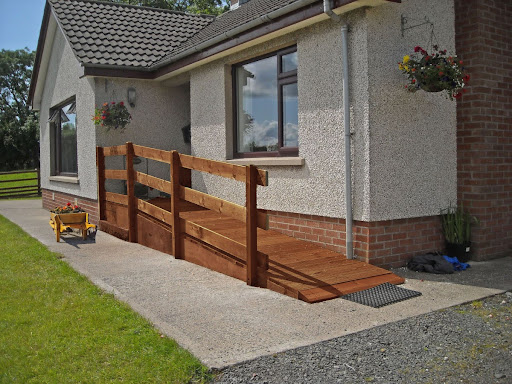
Adapted properties, on the other hand, are standard homes that have been retrofitted to meet the specific needs of the tenant. This might mean installing grab rails in a bathroom, adding a stairlift, or lowering kitchen worktops to make them easier to use for wheelchair users.
Industry design specialists, such as those at Village Bathrooms explain that this is one of the reasons why open-plan bathrooms have become so popular: “as populations age and awareness of inclusive design increases, more homeowners are thinking about long-term usability when renovating or building their bathrooms. Open-plan bathrooms remove the need to step over bathtub edges or into enclosed shower cubicles, making them ideal for people with mobility challenges, wheelchair users, or anyone who may face physical limitations in the future.”
While accessible properties offer universal design, adapted properties provide targeted solutions. A quick assessment of your property might reveal seemingly minor changes that could make the property significantly more accessible.
PfH Scotland state that by 2043, over 22% of Scotland’s population will be of pensionable age, which could mean that many older people will be living in homes that no longer meet their mobility and health requirements. Adapting properties is a solution that could ease the pressure on the social care sector and help people stay in their homes for longer.
Investing for ROI with strategic updates
With this in mind, what can landlords do to stay ahead of the competition and make their rental properties more desirable to a broader tenant base?
Making the right changes
For landlords considering proactive adaptations, the bathroom is a great place to start. In fact, it can be one of the most impactful investments because it caters to everyone’s needs.
Converting an existing bathroom into a luxury wet room, with level-access shower, non-slip flooring, and wall-mounted fixtures to free up floor space, doesn’t just make the space work for wheelchair users and those with mobility issues but also other demographics.
Young professionals will appreciate the contemporary look, families will value the practicality and easy maintenance, and older or disabled tenants will benefit from the essential accessibility.
Budgeting
The budgeting balance needs careful consideration. High-impact investments like widening doorways and installing ground-level toilet facilities where they’re not currently available will create lasting value, while cosmetic elements can be economised more effectively, like choosing mid-range grab rails that still meet safety standards without the luxury price tag.
Funding
Landlords should also explore funding opportunities through their local authority. Edinburgh City Council and other local authorities offer support for private tenants requiring adaptations. Landlords who facilitate these applications often find that grant funding covers substantial costs, making adaptations financially viable while building strong relationships with tenants and local housing officers.
Commercial value and social impact
Providing adapted housing is the sweet spot where regulatory compliance, business intelligence, and social responsibility meet. Landlords who can embrace accessibility improvements are likely to benefit from reduced tenant turnover too. Adapted properties foster longer tenancies as tenants are understandably reluctant to leave homes that meet their specific needs. It’s a level of stability that translates into reduced void periods, lower re-letting costs, and predictable income streams.
Adapted housing strengthens the social pillar of environmental, social, and governance (ESG) frameworks increasingly scrutinised by lenders, investors, and regulators. It also means you play a role in proactively addressing Scotland’s accessibility gap, as essential contributors to inclusive communities. In a market where differentiation is key, adapted properties offer both moral clarity and commercial advantage; a combination that defines sustainable, forward-thinking property investment.