For Scotland’s landlords and letting agents, the regulatory landscape is shifting faster than the North Sea tide. The introduction of the Heat in Buildings Bill and the relentless ratcheting of the Energy Efficiency Standard for Social Housing (EESSH) mean that properties with an EPC rating below C are becoming increasingly difficult and expensive to let. The instinctive response to this pressure has been to focus on the big-ticket items: boilers, heat pumps, and insulation. These are necessary, but they are not sufficient. There is a hidden variable in the energy efficiency equation that is often overlooked, yet it directly impacts both your EPC score and your tenant’s willingness to renew a lease: ventilation. The installation of heat recovery units (MVHR) can offer a return on investment that makes them an attractive consideration.
The EPC Algorithm: Why MVHR Moves the Needle
An EPC assessment is not merely a measure of how thick your insulation is. It is a calculation of energy balance. The software (RdSAP) considers how much energy is required to heat a property, but also how much energy is lost through ventilation. A property that relies on ‘natural ventilation’i.e., trickle vents and open windows, is modelled with a significant infiltration rate. This heat loss is assigned a cost. It appears in the ‘fabric’ and ‘ventilation’ sections of the assessment and directly drags down the asset rating. A Mechanical Ventilation with Heat Recovery (MVHR) system fundamentally changes this calculation. Instead of losing warm air, you recover it. RdSAP 10.0 and the forthcoming SAP 11 recognise this with specific credits for systems that achieve a certain Specific Fan Power (SFP) and heat recovery efficiency. In practical terms, installing compliant MVHR in a flat or house can lift the EPC score by 5 to 10 points. In the marginal world of EPC bandings (where 68 is an E and 69 is a D, or 54 is a D and 55 is a C), those points are the difference between a lettable asset and a stranded liability.
Damp, Mould, and the Tenant Complaint
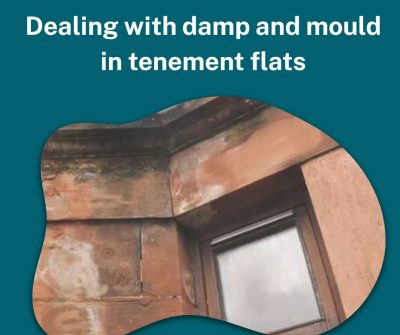
Beyond the spreadsheet, there is the human factor. Tenant complaints about condensation and mould are the single most common source of dispute in the Scottish private rented sector. The recent amendments to the Repairing Standard in Scotland now explicitly require landlords to address issues of damp and mould, with tenants empowered to refer cases to the First-tier Tribunal. Defending a case by stating ‘the tenant didn’t open the windows’ is becoming legally untenable. Landlords have a duty to provide a home that is capable of being kept free from damp and mould. If a property’s design (sealed windows, solid walls, high occupancy) makes it impossible to achieve a dry environment through manual ventilation alone, the landlord is responsible for installing mechanical assistance. A continuous-running extractor fan with a humidistat in the bathroom is the baseline. However, for whole-house coverage, particularly in open-plan flats converted from tenement buildings, a centralised or decentralised MVHR system can ensure background ventilation irrespective of tenant behaviour. This is not an expense; it is a risk mitigation strategy. One avoided tribunal case pays for multiple systems.
Valuing the Asset: The Premium on ‘Healthy Home’ Status
Experienced letting agents in Edinburgh, Glasgow, and Aberdeen are noticing a bifurcation in the market. Properties marketed as ‘newly refurbished’ are no longer sufficient. Tenants are increasingly asking specific questions about EPC ratings, heating systems, and notably, ventilation. A property that features ‘whole-house MVHR’ is often perceived as superior stock. For the institutional landlord or the Build-to-Rent operator, specifying MVHR is a competitive differentiator. It signals that the asset is managed to a high standard and that tenant wellbeing is prioritised. In an oversupplied rental market, that differentiation is invaluable.
Retrofit Realities: Practical Installation in Scottish Tenements
The most common objection from Scottish landlords is the perceived difficulty of installing ductwork in traditional stone-built tenements. It is true that running 125mm rigid ducts through a B-listed building is problematic. However, technology has moved on. Decentralised MVHR units, installed directly through the external wall of individual flats, require no centralised ducting. Each living space gets its own unit, working independently or in a master-slave configuration. These units are compact, can be installed with minimal damage to the fabric, and are virtually invisible when finished with a suitable wall grille. For landlords concerned about listed building consent, there are heritage-approved grilles available in cast iron or unobtrusive RAL-matched colours. The objection of ‘impossible to install’ is now a relic of the past. It is simply a matter of selecting the appropriate product for the specific building constraint.
Warranty and Longevity: The 20-Year View
A landlord’s business model relies on predictability. A boiler has a known lifespan of 12-15 years. A heat pump, 20 years. An MVHR unit, when specified with high-quality EC motors and aluminium cross-flow exchangers, also has a lifespan of 20+ years. The maintenance requirement is simple: filter changes every 6 to 12 months. Some landlords are now including this in their annual gas safety check service, asking the engineer to visually inspect and replace the ventilation filters while on-site. This low annual cost prevents the high capital cost of premature motor failure. When calculating the return on investment, landlords should amortise the cost of the MVHR system over two decades, not two years. The cumulative energy savings, EPC uplift, tenant retention rates, and void reduction can far outweigh the initial outlay.
Conclusion: The Professionalisation of Letting
The days of the amateur landlord buying a tenement flat and letting it ‘as is’ are ending. The professionalisation of the sector demands professional-grade equipment. Heat recovery ventilation is no longer a niche specification for eco-enthusiasts. It can be a standard component of a high-quality, compliant, and desirable rental property. It protects your EPC, protects your tenants’ health, and protects your asset’s value. For the Scottish landlord looking to the next decade, the question should not be ‘Can I afford MVHR?’ but ‘Can I afford to let a property without it?’