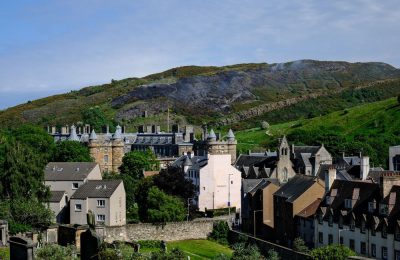
When we think of the word ‘tenement,’ we often think of a traditional building constructed from sandstone in the 19th century. However, under Scots law, a ‘tenement’ is any building divided horizontally into two or more flats, and this includes many four-in-a-block and high-rise buildings constructed in the late 20th century. Many of these buildings have external cladding on them, which provides insulation and rain-proofing but can also present a fire risk. This article will explain what cladding is, why it can cause a fire risk, what the Scottish Government is doing to mitigate the risks caused by cladding, and what tenement owners can do right now to keep their cladded buildings safe from fire.
What is cladding?
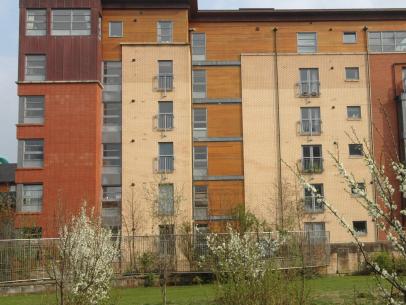
Cladding is a form of external insulation, applied either directly onto walls or onto a framework which is affixed to the walls of a building. Some forms of cladding can create a fire risk due to the materials they are constructed from, such as Aluminium Composite Material which has flammable insulation, or High-Pressure Laminate panels which are made from sheets of wood or paper fibre which are highly flammable. Other forms of cladding are problematic because of the method used to attach them to the walls. If there is a gap between the wall and the cladding, this gap acts like a chimney flue and draws smoke and flames upwards, allowing a fire to spread quickly.
Grenfell inquiry
These were some of the problems identified in the inquiry following the deadly Grenfell Tower fire in London in 2017. In that fire, 72 residents of a high-rise block died as cladding on the building allowed a fire in a fourth-storey flat to spread rapidly. The specific type of aluminium cladding used on Grenfell Tower has been banned in Scotland and is present in very few buildings, but many cladded buildings still present a fire risk. This risk is amplified in buildings above 11 metres high, because that is the maximum height of ladders on fire tenders, which makes it more difficult for firefighters to safely evacuate residents from high-rise buildings.
Scottish Government action
Since the Grenfell fire, the Scottish Government has introduced a number of measures to assess and mitigate the fire risks caused by cladding. In 2018, the EWS1 form was introduced, which mortgage valuers use to assess whether a cladded building is safe enough to be mortgaged. However, it is important to note that an EWS1 form is not a fire safety certificate.
In 2024, the Scottish Government passed new legislation designed to improve the way that fire safety assessment and remediation is tackled in cladded buildings. The Housing (Cladding Remediation) (Scotland) Act 2024 is gradually rolling out a new Single Building Assessment system which will allow the owners of some buildings to receive a full fire safety assessment, and remedial work to fix any problems, at no cost to themselves. The Act gives Scottish Government Ministers the power to organise assessments and urgent work, and even organise evacuations of a building’s residents if the cladding on their building poses a substantial risk to human life.
It is expected that developers will shoulder the cost of the assessments and work, but the Scottish Government will step in to provide funding for factors or homeowners if their developer is unable or unwilling to pay.
This new legislation is designed to ensure that every cladded building in Scotland can be made safe to live in, without going through the normal process of organising maintenance works in common areas of tenement buildings, which can be a long and prohibitively expensive process for homeowners.
What can owners do?
While the Cladding Remediation Programme is being rolled out gradually across the country, there are a few things tenement owners can do right now to mitigate the risk of fire in their buildings. If you have a factor, you can ask them to commission a fire safety assessment, or if you don’t, you can work with your fellow owners to organise one with the help of a registered Fire Engineer. You can also join the High Rise Scotland Action Group, a pressure group which represents homeowners affected by cladding.
In the short term, you can ensure that your home has ceiling-mounted, interlinked fire alarms and carbon monoxide detectors fitted, with one heat alarm in the kitchen, and smoke alarms in the hall and your main living area. Make sure that the front door to your flat is fire-proof, with intumescent seals at the edges, and a self-closing device. Talk to your neighbours about the importance of keeping your close and stairs clear of rubbish and any obstacles which might prevent a safe escape.
You can also make an escape plan, which identifies how you will warn your family and neighbours of a fire, which rooms have suitable windows to escape from, and where you could gather safely if you cannot get out of your building. The Scottish Fire and Rescue Service offers free home safety visits where they can identify potential risks and create an escape plan with you.
To find out more about cladding and fire risks, visit Under One Roof’s dedicated webpage on the topic. Under One Roof is Scotland’s only charity providing free information and support to tenement owners and housing professionals, on tenement maintenance, management and retrofit.