In tenement buildings across Scotland, damp and mould are persistent problems. As Scotland’s only charity dedicated to providing free information and support to tenement owners and housing professionals, it is a problem we encounter frequently at Under One Roof. In this article, we will explain why damp and mould pose such serious problems to buildings and people, how to prevent them, and what the Scottish Government’s new Housing (Scotland) Act 2025 means for private landlords responsible for dealing with damp and mould in tenement flats.
Understanding the Causes of Damp and Mould
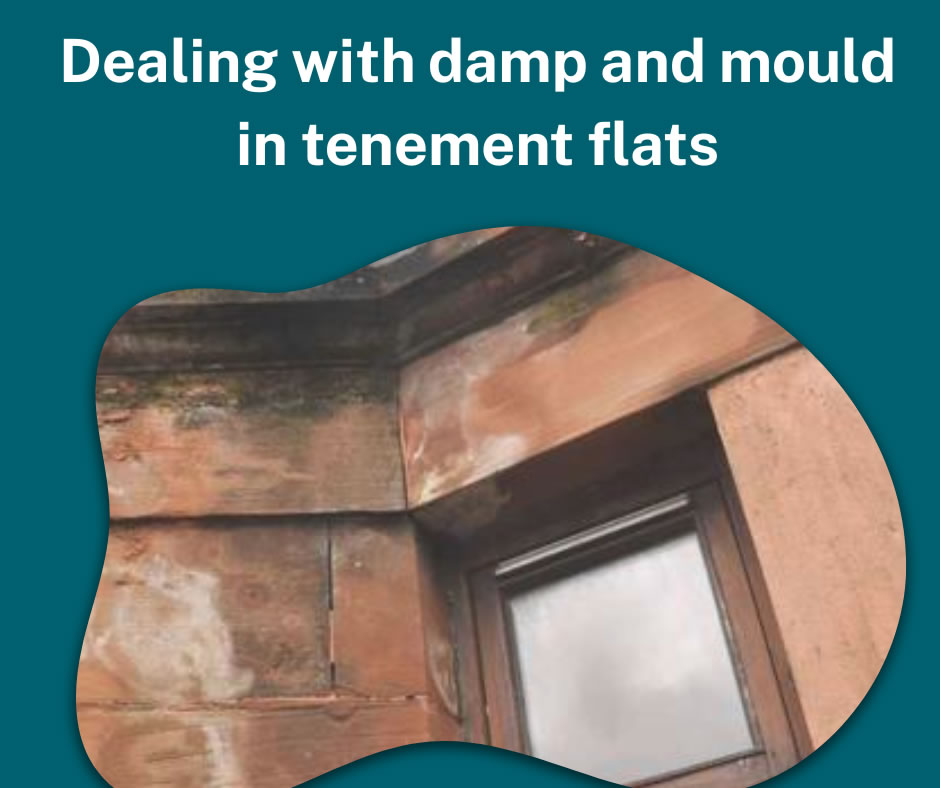
Damp and mould are both caused by too much moisture inside a building. ‘Damp’ occurs where water is causing damage to the fabric of a building, such as external walls, windows or timber. Mould is a fungus which grows in these damp areas. Excess moisture in a building can come from inside, due to poor ventilation and habits such as drying clothes indoors, or from external problems such as leaking gutters or groundwater coming from underneath a building.
Damp and mould can cause significant damage not only to buildings, but also to human health. Damp can threaten the structural integrity of building materials, and mould can cause allergic reactions and worsen existing conditions like asthma.
The dangers of mould exposure came to national attention in the UK when, in December 2020, a two-year-old child named Awaab Ishak died as a result of prolonged exposure to mould in his home in Rochdale, England. Awaab’s law, which compels housing associations and private landlords to act to tackle damp and mould, was introduced first in England in October 2025, and is now coming to Scotland.
Practical Steps to Stop Damp and Mould Developing
Thankfully, there are several things that landlords can do to prevent damp and mould in their properties, ensuring their building’s structural integrity and the health of their tenants. Firstly, communicate with your tenants about lifestyle changes they could make to reduce excess moisture, such as drying clothes outdoors or opening windows while running the shower or bath. Crucially however, look out for and tackle any external damage which may be causing damp and mould:
- Check your property periodically for signs of damage caused by damp, and arrange repairs to these areas in a timely fashion to prevent more damage
- Ensure that a damp-proof course has been installed along the ground floor walls of your building, and check it for any signs of damage which could let in damp
If damp and mould are already present in your property, there are several things you can do to treat it, depending on the cause:
- Leaking gutters can be replaced
- Damaged stonework can be fixed by a qualified stonemason
- A surveyor can be hired to check that ventilators in your tenement flat have been installed and are working correctly
How Awaab’s Law Will Affect Scottish Landlords
Awaab’s law is coming to Scotland, and will affect both social and privately-rented housing. The Housing (Scotland) Act 2025 has updated the tolerable standard for rented accommodation, to allow Government Ministers to introduce new regulations on damp and mould. These will include:
- A legal duty to investigate complaints about damp and mould
- Strict timescales for the repairs process to resolve damp and mould
Damp and mould are significant problems facing Scotland’s housing stock. Any type of property can be affected, and damp and mould have many causes related to excess moisture in a building. Landlords have responsibilities to carry out repairs, according to the Repairing Standard and Tenancy Law, to ensure their tenants have a safe, warm and comfortable property to call home. We would encourage any landlord dealing with damp and mould to seek professional help and contact Under One Roof for more information, via our ‘Ask An Expert’ enquiry service.
If you are a housing professional, and would like more information on how Awaab’s law may impact your work, consider contacting Under One Roof to arrange a webinar for your staff team or clients. Email us at info@underoneroof.scot.