2026 promises to bring significant changes to tenement maintenance and management in Scotland. New legislation around mandatory owners’ associations and damp and mould is on the horizon, which will impact landlords and letting agents across the country. This article explores what’s new for 2026, and how these changes will impact tenement owners and housing professionals alike.
Mandatory owners’ associations (OA’s)
Firstly, in December 2025, the Scottish Law Commission published a report urging the Scottish Government to introduce legislation making owners’ associations mandatory in Scotland’s tenements. The report contains recommendations around how owners’ associations should be set up and what their key duties should be, and some background information on how they could help to solve Scotland’s problem with poor tenement maintenance.
Owners’ associations help tenement owners to work together to maintain their building, by creating a formal group where repairs can be discussed, planned and saved up for. They are a crucial tool for owners who want to plan regular maintenance tasks which prevent serious damage and big bills, such as annual gutter cleaning or five-yearly window repainting. By being part of an owners’ association, tenement owners can foster open, friendly communication with their neighbours, so that when the time comes to make decisions or pay a large repair bill, they can work together more easily.
The new legislation could make owners’ associations mandatory, placing duties on tenement owners to hold at least one meeting per year, appoint a manager, and approve a budget for repairs to their building. It’s hoped that mandatory owners’ associations will help owners to keep on top of the maintenance of their buildings. More information about exactly how the mandatory associations will work is sure to follow if the legislation is introduced to Parliament. It is hoped that a bill will be introduced following the May elections.

Awaab’s Law on damp and mould
Damp and mould continues to dominate and in March 2026, Awaab’s Law is expected to become law for social and private sector housing. In 2020, a two-year-old child named Awaab Ishak died in Rochdale in England, as a result of prolonged exposure to mould in his council house. Following this tragedy, legislation has been introduced in England to compel social and private landlords to tackle complaints of damp and mould in their properties under strict timescales. As part of the Housing (Scotland) Act 2025, the Scottish Government is planning to introduce similar legislation in Scotland. While the exact details of the duties being placed on landlords are not yet known, we expect that landlords will follow the English model and have responsibilities to respond to complaints within specified timeframes, to carry out troubleshooting such as cleaning mould and checking that there is adequate ventilation, and putting plans in place to carry out repairs to their properties and buildings.
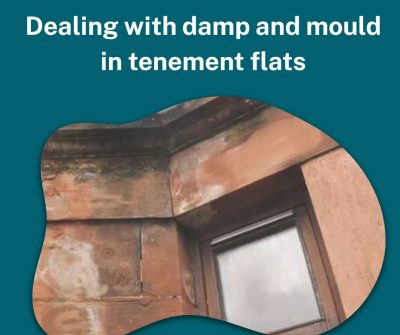
Damp and mould can be caused by a wide variety of issues, from leaking gutters, faults in stonework or poor ventilation. While there can be an element of tenants’ lifestyle choices which can cause condensation that can lead to mould growth, it is important for landlords to identify the root source of the problem and be proactive at arranging common repairs where there are fabric issues, as well as ensuring tenants have suitable information on how to heat and ventilate the property. Click here for free information on how to get ahead of damp and mould, before the new legislation arrives.
Mandatory building reserve funds and building inspections
Alongside mandatory owners’ associations and Awaab’s Law, work has been taking place with organisations on two other possible solutions to Scotland’s tenement maintenance problem; mandatory building reserve funds and five-yearly building inspections. In December 2025, a report was published by Under One Roof Scotland in partnership with Gillian Campbell Consulting and The MCS Foundation on a workable model for building reserve funds, which could help tenement owners to save up for major repairs by allowing them to save small amounts of money on a regular basis. The funds can then be drawn on as needed. They urged the Scottish Government to introduce mandatory building reserve funds alongside mandatory five-year building inspections and mandatory owners’ associations as a new, integrated system of tenement management, designed to help owners work together, save together, and anticipate what repairs need to be carried out in their buildings.
In conclusion, 2026 is shaping up to be a big year for tenement maintenance and management. The impending legislation and proposals could change the way that tenement owners tackle building repairs, protect their investments and pay for works which will help to maintain Scotland’s housing stock condition. Keep an eye on the Under One Roof website for news and updates.